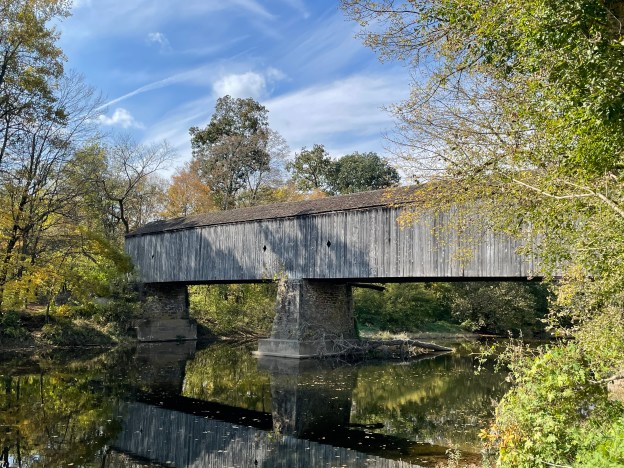
It was October— Fall, my favorite season. The air was crisper, the sky bluer and the trees beginning to change color. I kept a wary eye on the trees and the prognostications on TV and newspapers on the best times to view Fall colors and where. So, when I read in the Bucks County Courier Times that it was time to visit Tyler State Park for the seasonal bonanza, I got into my car and headed over.

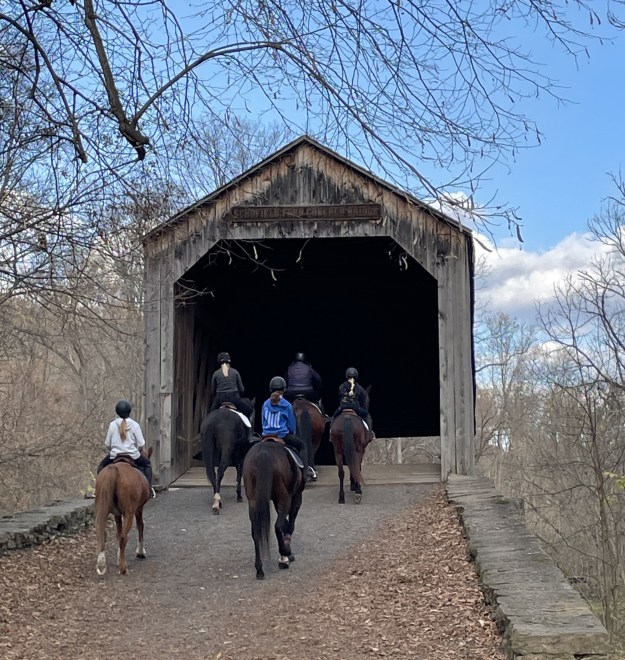
Tyler State Park covering 1711 acres of woodland, meadows, hiking and horse riding trails in Bucks County, Pennsylvania, has another prime attraction, the Schofield Covered Bridge.
From 1868-1871, the residents of Newtown and Northampton townships “beseeched” (nice, quaint term) the county commissioners to build a bridge to more easily traverse the Neshaminy Creek. After nearly three years of intense beseeching and lobbying, the Schofield-Ford Covered Bridge (now shortened to Schofield Covered Bridge) was finally built in 1873. The prodding and lobbying aspect still continues in our government to this day. Some things in the universe remain constant.
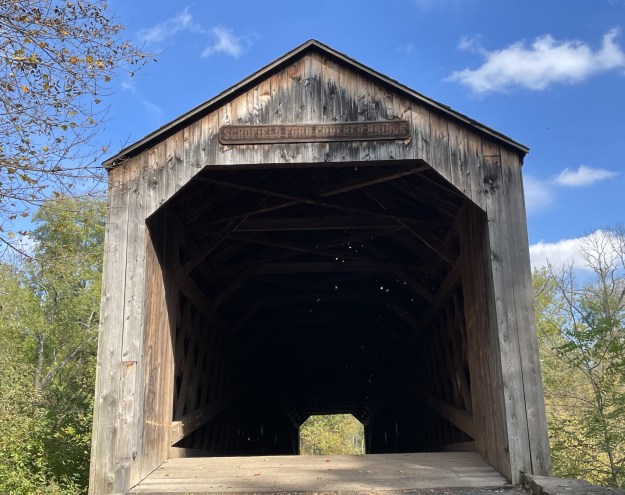
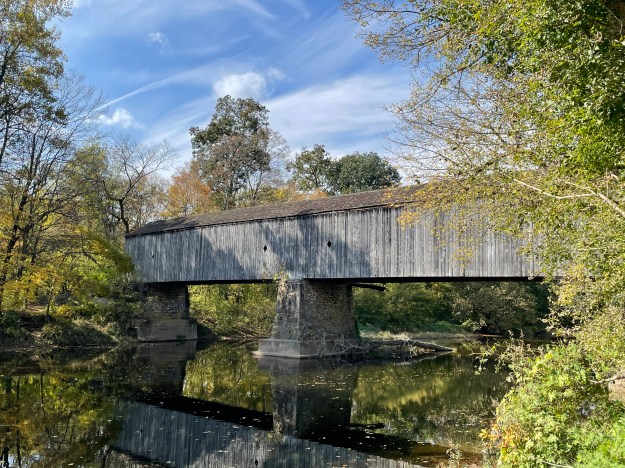
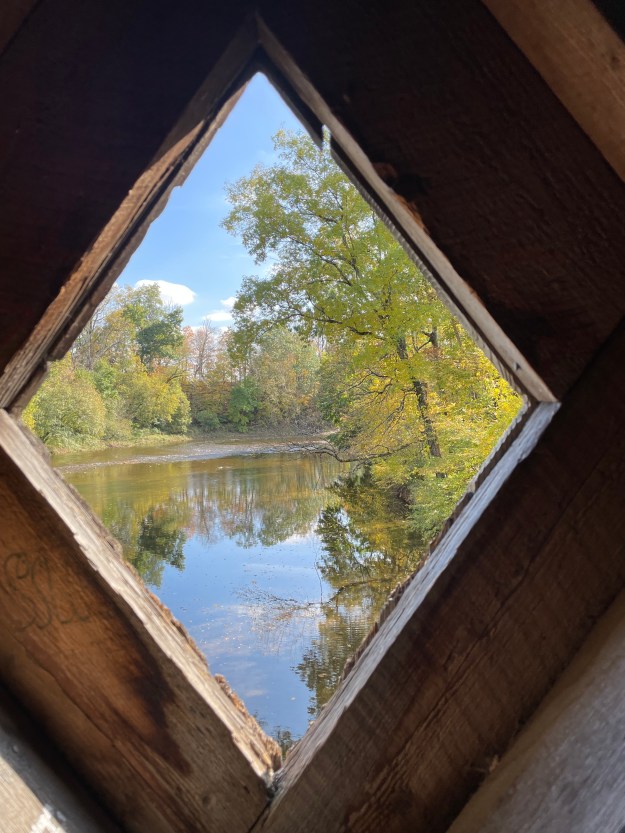
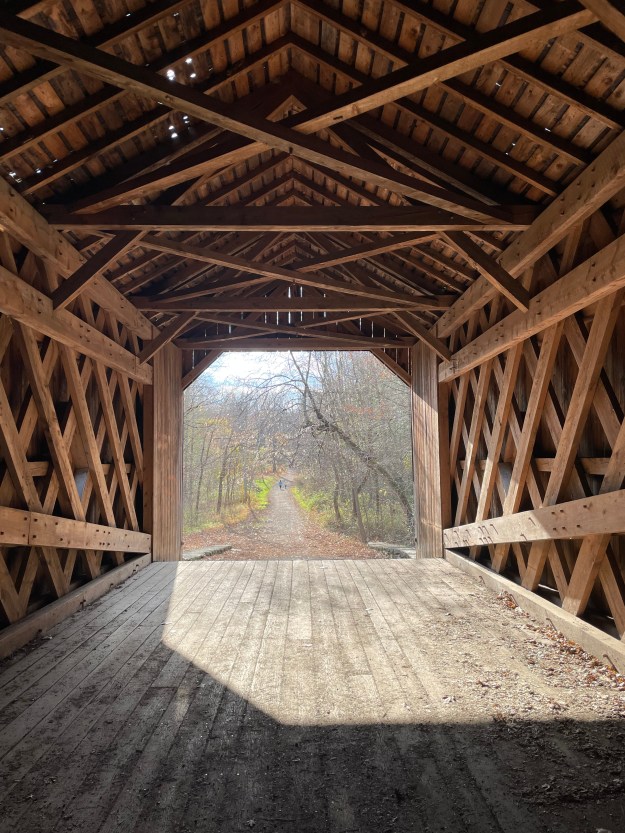
Unfortunately, the original was burnt down by arsonists in 1991. A new bridge was then constructed from Pennsylvania hemlock and white oak and dedicated to the volunteers and builders in 1997. It is unpainted. Later, six diamond-shaped windows were added to prevent visitors from prying back the boards to get a glimpse of the creek and the surroundings. Needless to say, one gets a gorgeous view of the fall foliage from the bridge, the reason for my visit.
I parked in the lot off Swamp Road in Newtown, PA, and started walking toward the bridge. It was a sunny, pleasant weekday, but there were quite a few cars in the parking lot. Like me, many took the time to enjoy this beautiful day.
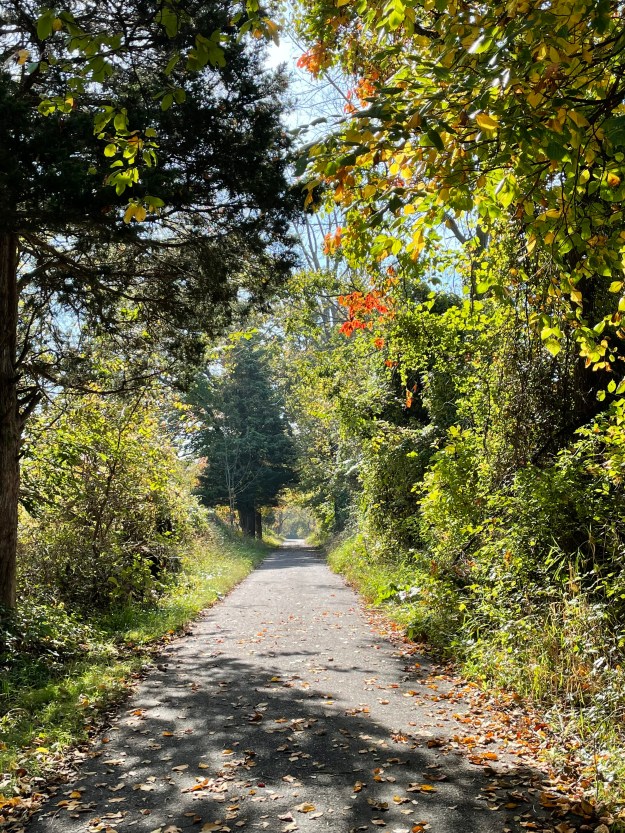
I strolled leisurely admiring the autumn foliage. It was still not at its peak, but the colors were definitely beginning to show. I took some pictures.
I came to the covered bridge over the Neshaminy, stopped and read the history about its conception, the fire and the rebuilding. The reconstructed version was before me and I slowly traversed it pausing to see the view from the diamond shaped windows on both sides. What must it have looked like a hundred years ago when men, horses and wagons crossed the bridge on their way to the market or to visit family and friends? Probably very similar to what I see now, the surroundings are well preserved.
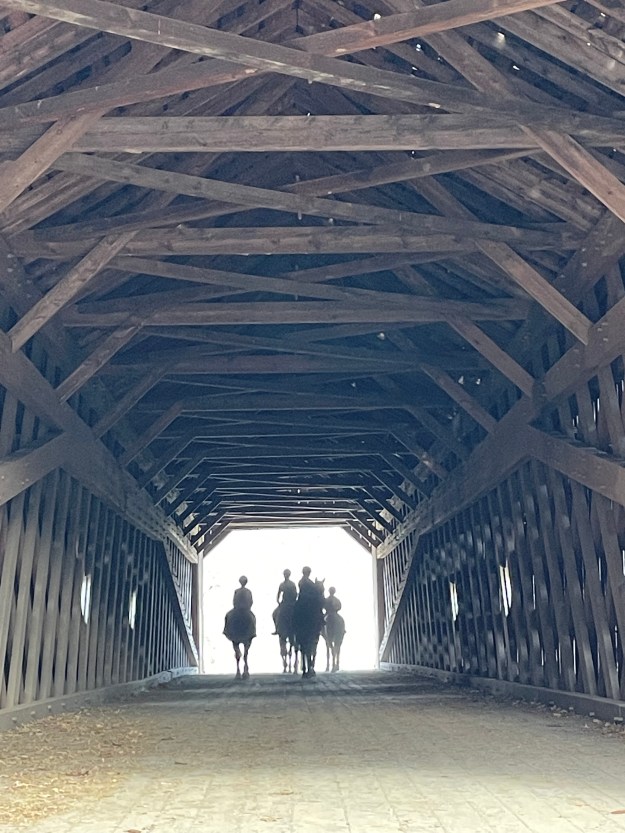
The bridge is now used by people and horses. I saw a group of riders enter, cross and exit the bridge at a fast trot. Initially I was a bit leery to have a group of horses pass me on a narrow bridge but they were well trained and the riders competent. We crossed without incident. There were a few young riders on smart ponies.
I crossed the bridge and continued my hike. The trail gradually began to slope upward giving me a nice cardio workout. After about a mile I stopped to catch my breath and view my surroundings. Imagine my surprise when I saw approaching me, on the path I was on, a lone deer. It was as surprised as I was, but not afraid. As any smart, wild animal would when faced with a man, it paused, cocked its head and studied me.
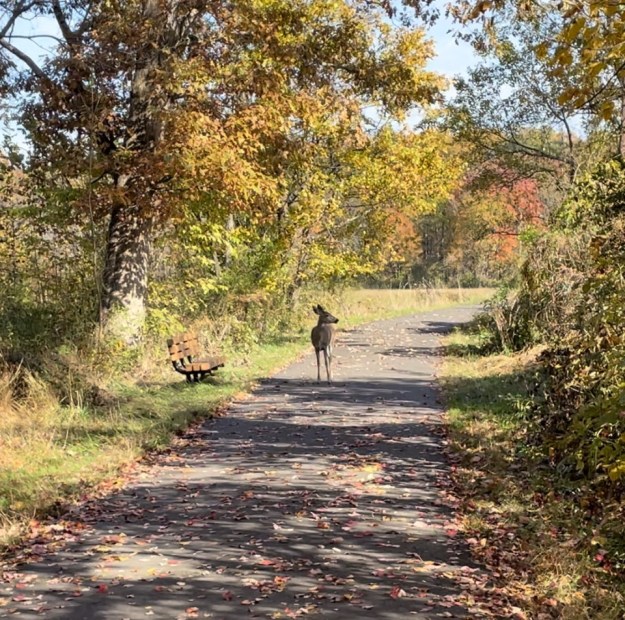
After some reflection it concluded that I was safe, a friend, and continued ambling toward me. It casually walked past without a “by-your-leave” or “thank you”, a mere hand’s-breadth from me. I took this opportunity to snap a few pictures. It’s glossy, brown winter coat shone burnished-bronze in the mellow afternoon sun. Even my movements filming did not bother it indicating this deer was quite used to people. A man was walking his dog, a large German Shepherd close by. The dog pricked up its ears, sniffed the air and looked longingly, but did not make a move or sound. Good doggy.
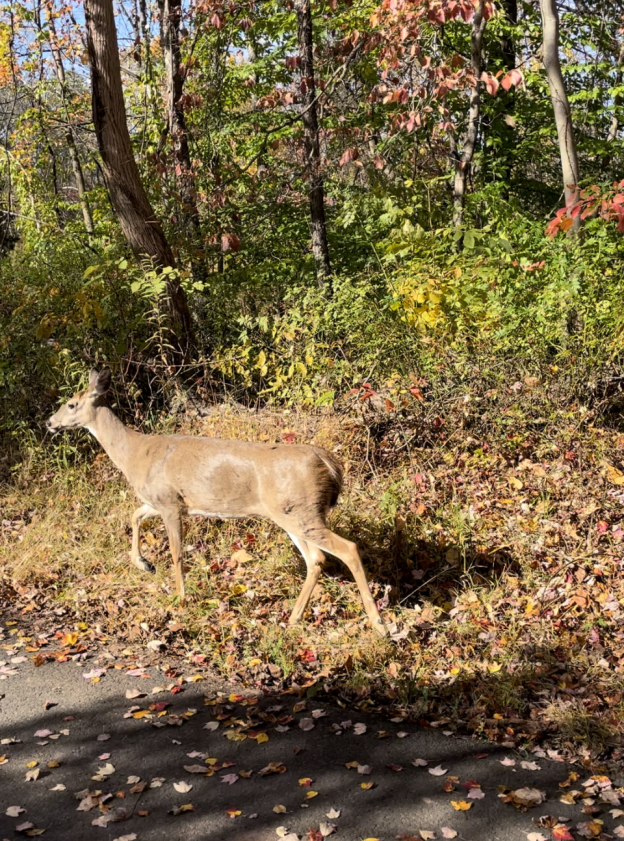
The deer was not spooked. I did not want to view the end result of a descendant of wolves launching itself at poor Bambi. I took heart in the fact that humans and wild animals were getting used to each other’s existence and actually welcoming the interactions, at least, in this State Park. That is a positive development for the planet.
I continued my walk. I came across a meadow carpeted with purple flowers.
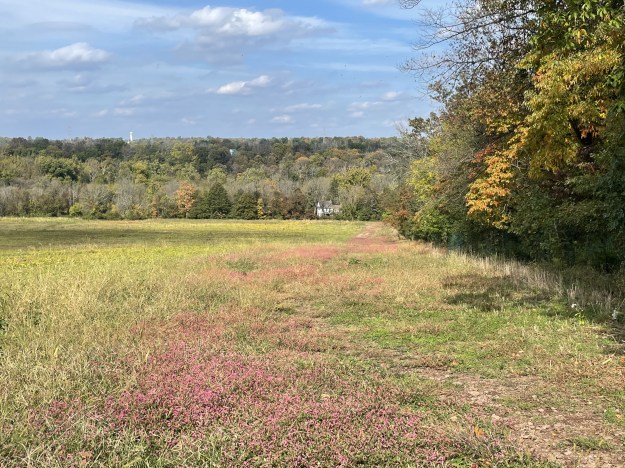
I traversed the meadow and turned back toward the bridge. The trail was downhill at this stage and therefore quicker and easier. I made good time. I could not resist taking a couple more pictures. The Town Truss Lattice support (patented by the architect and engineer Ilthiel Town in 1820, hence the name) intrigued me. The bridge had been painstakingly restored following the plans for the original bridge.
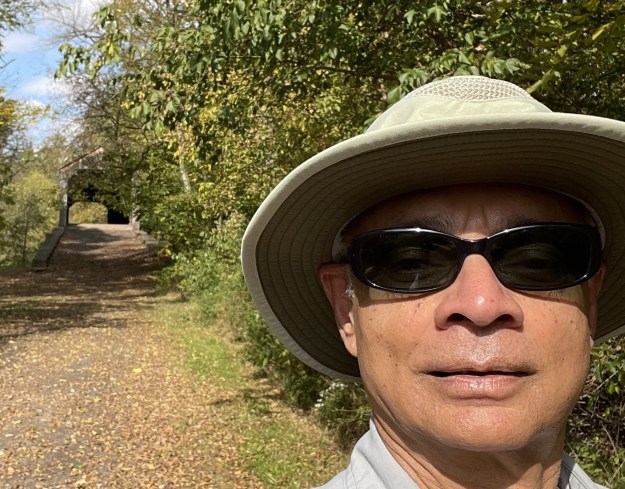
I took a final selfie and headed for my car and home. It had been a very satisfying walk through the woods at Tyler State Park, a perfect way to spend a bright Fall afternoon.
 Ranjan's Writings