Continued from My Canadian Rockies Trip, Part 4: Bar U Ranch and Banff.
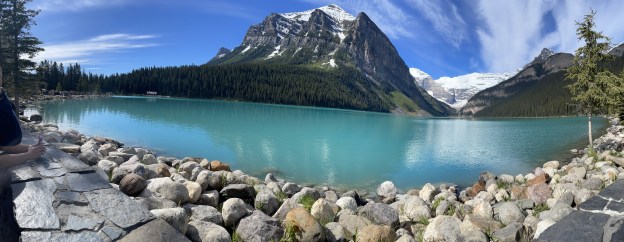
We started the day with a hearty breakfast at our hotel in Banff and readied ourselves for the trip to three iconic lakes in the Canadian Rockies known for their uniquely beautiful, blue shades; Louise, Moraine and Peyto Lakes. We had glimpsed Lake Louise from the top of Sulfur Mountain as described in the last post. Today I was looking forward to viewing it up close.
Lake Louise, is named after Princess Louise Carolina Alberta, the fourth daughter of Queen Victoria. The glacier covered Mount Victoria provides the unique backdrop seen through the V formed by forest-covered peaks. It is no surprise that many peaks, provinces and features in Canada are named after members of the British Royal Family.

It is not a large lake and a reasonably fit person can easily hike around its circumference. We walked a part of it on a well maintained trail along with others of our tour group. Often we would stop to admire the scenery and the turquoise color of the water which varied with the depth, time of day, ambient light, and direction of vision.
The amazing blue shades seen in these glacier-fed lakes are due to a very fine sediment of crushed rock (rock flour) deposited by glacier melt that remain suspended in the water. These particles selectively absorb and scatter sunlight in a way that the wavelengths of mesmerizing blue reach our eyes.

After the hike around part of the lake we got on the bus and headed for Moraine Lake and its famous Rockpile.
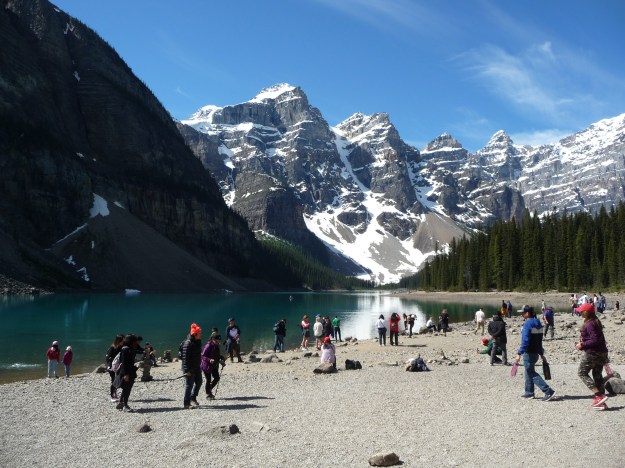
Moraine Lake is in the Valley of Ten Peaks in Banff National Park. One can see the jagged peaks reflected in the waters. But the uniqueness of this lake is the famous “Rockpile” left by retreating glaciers that deposited this pile of rocks and boulders they had carried on their long journey. Such a mound of debris is called a “moraine”, hence the eponymous name. The brave and fit adventurers among us climbed up this Rockpile but I decided against it. No point in risking a broken or sprained ankle on vacation.

After a quick lunch we headed on to Peyto Lake. In my opinion, this was the bluest of the three lakes we visited today.

I was so impressed by its color and the wonders of the Canadian Rockies that I wrote a short article when we got back. It was published in the AAA magazine—The Extra Mile in their “Just Back From” section, shown below.

After Peyto Lake we headed toward Jasper. It was late afternoon when we arrived at our lodges in a beautiful wooded setting beside the swift-flowing Athabasca River.

We got off our coach, stretched after the long ride and headed toward the river as our bags were being unloaded. The water was ice cold and flowing rapidly. We saw the dancing white caps on the surface as it raced by.
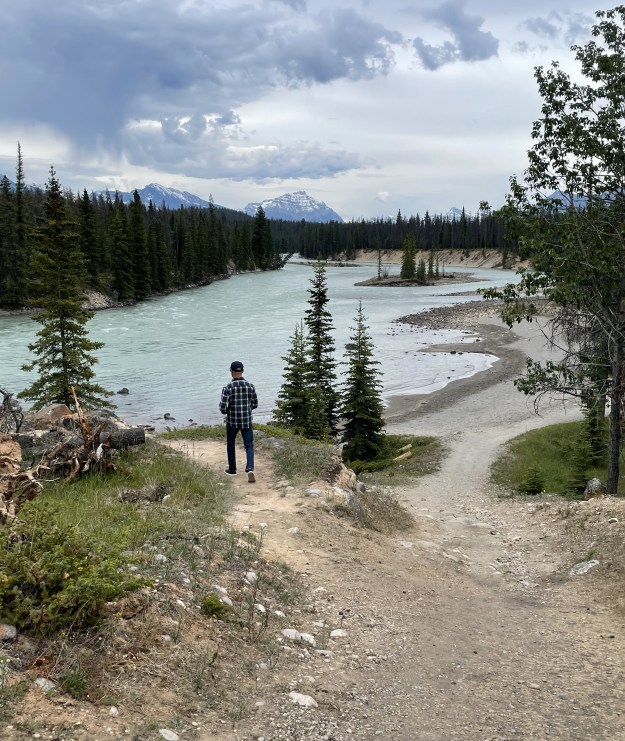
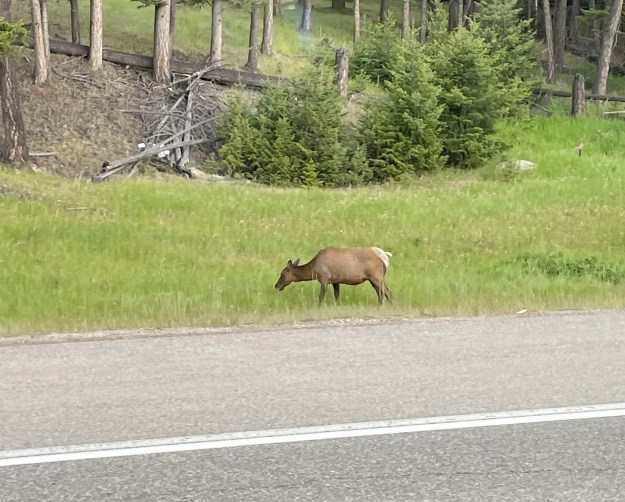
After we had checked in we went for another walk to stretch our legs and admire the wooded bounty of Jasper National Park. We saw verdant mountains with a dusting of snow, we heard the gurgling of the swift-flowing, glacier-fed Athabasca River and soon glimpsed elk grazing nonchalantly by the road oblivious of passing cars. I took pictures from a safe distance—we had been warned it was calving season and mother elks can get pretty defensive of their little ones, a trait conserved throughout the animal kingdom.
After a glass of wine and a nice dinner I was ready for bed. It had been a long and glorious day. I fell asleep dreaming of blue skies and turquoise lakes.
Next: Maligne Lake, Spirit Island and Columbia Icefields.

 Ranjan's Writings
Pingback: My Canadian Rockies Trip, Part 6: Maligne Lake, Spirit Island and Jasper. | Ranjan's Writings